
Grant County Court Record Requests
Court Administration in Grant County keeps the local Minnesota District Court files for the county. That covers criminal, civil, family, probate, juvenile, conciliation, and traffic cases. The online starting point is MCRO. It can show a case, the Register of Actions, hearings, judgments, and eligible public documents. A public result is not a certified record, though. Certified, exemplified, older, physical, or restricted material still goes through Court Administration.
- Use MCRO Case Search or the notice in hand to identify the exact case number, event, and document title.
- Try MCRO Document Search with the complete number for an eligible public image or print route.
- For courthouse access, visit the Court Administration counter or ask staff for the public statewide case-record terminal.
- Call 218-685-7675 to confirm the local process, whether a record is on site or archived, and what copy type is appropriate.
- For a mail request, use the statewide copy-request form or a detailed letter and confirm current mailing and payment instructions first.
- The county publishes fax 218-736-9929 and an after-hours courthouse-parking-lot drop box, but it does not state which record requests either accepts, so verify use before sending a request or payment.
- When a formal government-data request is needed, identify the data precisely and request inspection or copies under Minn. Stat. § 13.03, subject to court-record rules.
Grant County publishes no local online copy-order portal, email ordering path, turnaround guarantee, or identity requirement. Call before relying on any request channel. Court Administration confirms which methods it accepts.
Grant County Court Records: Three File Layers
A Grant County court record request goes smoother when you keep three layers apart. The Register of Actions is the searchable event list. A filed document is the actual complaint, motion, order, or judgment tied to an event. A certified copy is what Court Administration prepares as an official court record. The event list may be enough to find something. Certification is what you need when the request demands the court's official stamp. The Grant County Court Administration page names the local office that keeps the files. It also handles court administration for the county.
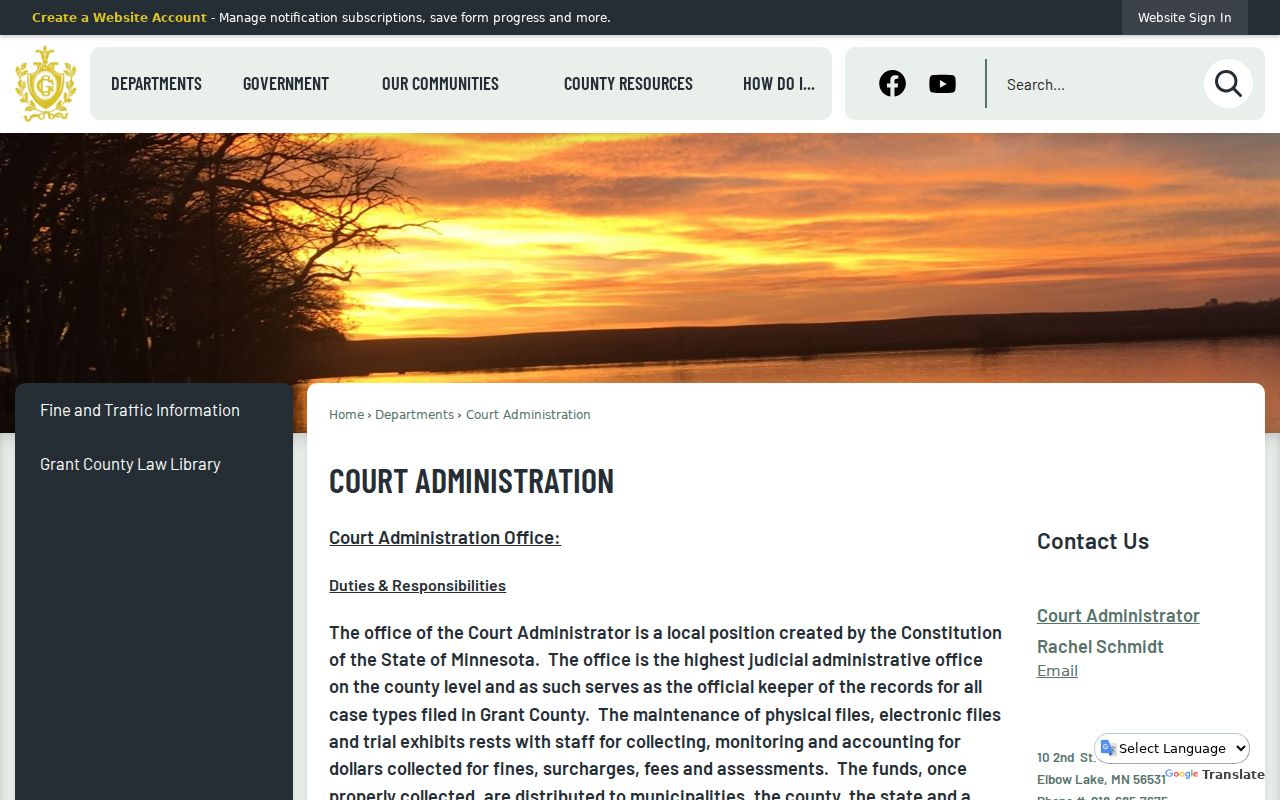
That local-custodian role matters in practice. A public docket entry found online still sends you to Court Administration for certified copies, paper files, exhibits, and access questions.
Kinds of Court Records
One Grant County Court Case Records request can pull in several record types. Remote availability depends on the case category, the document type, its date, and the access rule that applies. So name the item you want. Request a particular order, docket event, or judgment rather than a general "file."
- Register of Actions or case-events history with filings, settings, orders, and dispositions.
- Public filed documents, including pleadings, motions, orders, and judgments where MCRO permits access.
- Hearing and calendar information connected to a case number.
- Judgment information and satisfaction details when MCRO Judgment Search makes them available.
- Certified or exemplified copies prepared by Court Administration.
- Physical, older, archived, or locally stored records that may require courthouse handling.
Transcripts work differently. The court reporter prepares them, not the clerk. Gather the case number, hearing date, judicial officer, and proceeding first. Then ask the court contact or the reporter about the transcript route that applies. Grant County posts no reporter contact or rate sheet.
Grant County Court Records Form Fallback
Minnesota publishes county-specific copy-request forms on a statewide page. Grant County does not appear on that list. The fallback is the statewide form or a detailed letter to Court Administration. Either way, a strong request states who you are and how to reach you, plus the case number if known, the case title or party information if known, the document or docket entry sought, the date or date range, plain or certified or exemplified, quantity, delivery preference, and payment. The Minnesota copy-request forms page is the statewide place to check what forms exist.
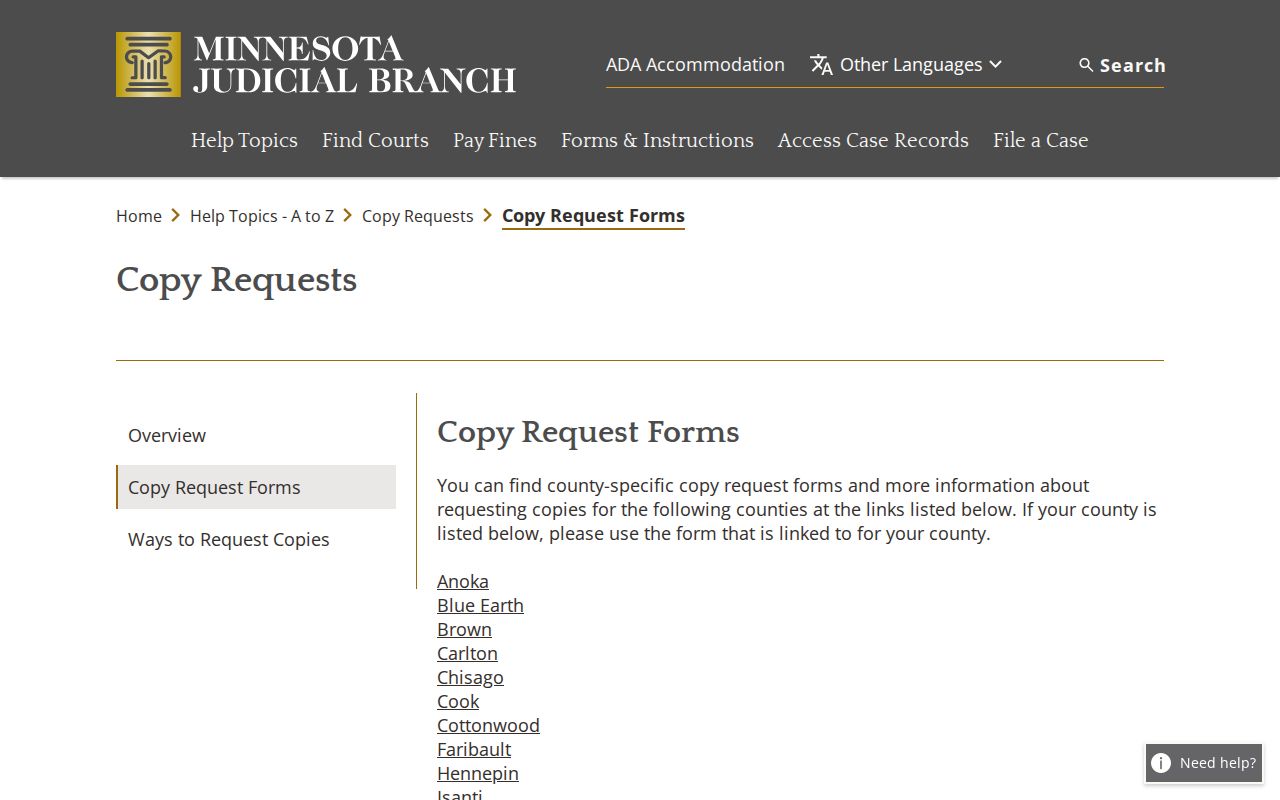
Since Grant County lacks a listed county-specific form, confirm with the local office whether a particular form or extra identity step now applies. Submit only what the office accepts. The Judicial Branch also explains its broader copy-request process for court records.
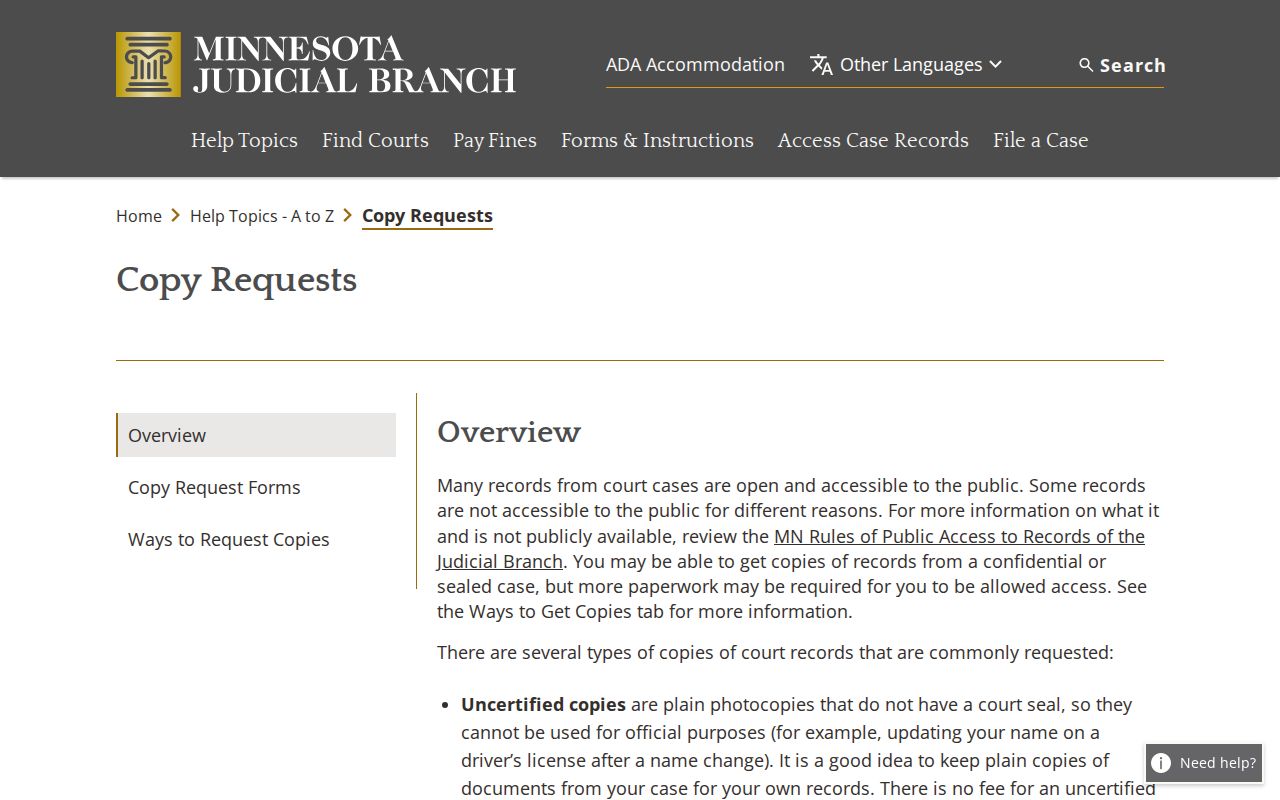
That guidance points toward an itemized request. A specific case and document lets Court Administration tell whether the record is public, stored locally, archived, or subject to another process.
Court Records: What They Contain
A Grant County court record is not always one tidy PDF. MCRO case details show the public structure of a case. A complete file, though, can hold documents, exhibits, and material that is not available remotely. The fields described here cover the common record structure. They are not a promise that every field or document is public in every case.
| Case number | The identifier used to connect the Register of Actions, Document Search, Hearing Search, and a Court Administration request. |
|---|---|
| Case header | Case category, filing date, court location, status, and publicly displayed party or attorney information. |
| Register of Actions | Chronological filing, service, motion, order, hearing, disposition, appeal, and judgment events. |
| Documents | Publicly eligible complaints, answers, motions, orders, judgments, or other linked records where availability rules permit. |
| Hearings and outcomes | Scheduled settings, judicial-officer information, dispositions, sentences, judgments, and financial information when displayed. |
| Exhibits and identifiers | Materials that can be restricted, redacted, retained in the court file, or unavailable for remote viewing. |
A visible number like 26-CV-26-134 only shows the local format. It is not the number assigned to any real case. Match public case details to the correct location, category, and event history before relying on them.
Grant County Court Records: Paper and Electronic Files
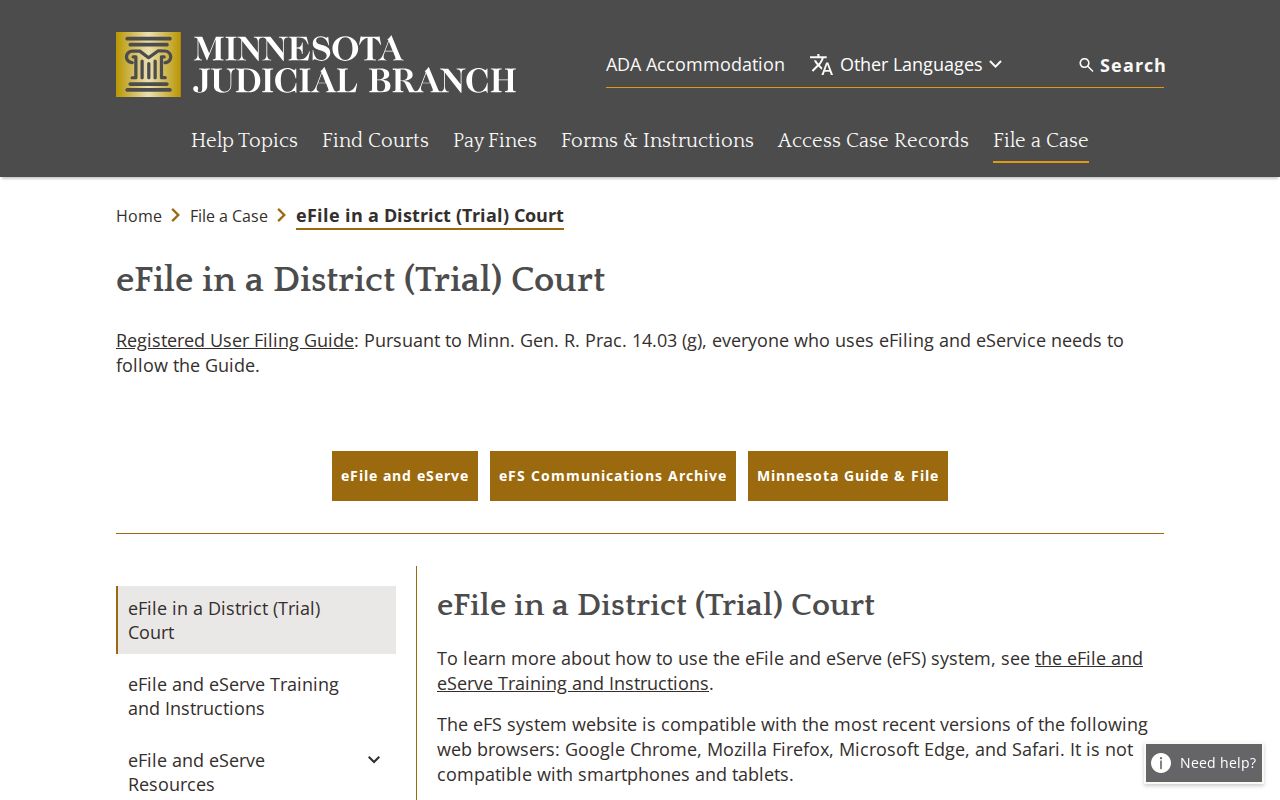
MCRO is the public search layer with eligible documents. EFile and eServe, called eFS, is something else entirely. This Minnesota Judicial Branch system handles filing and service. It serves attorneys, government agencies, guardians ad litem, and voluntary self-represented users. It is not the public docket. An accepted filing enters the court record system. It may reach MCRO later only if it is public and eligible for remote access. The eFS resources page explains the filing-service environment that produces electronic court filings.
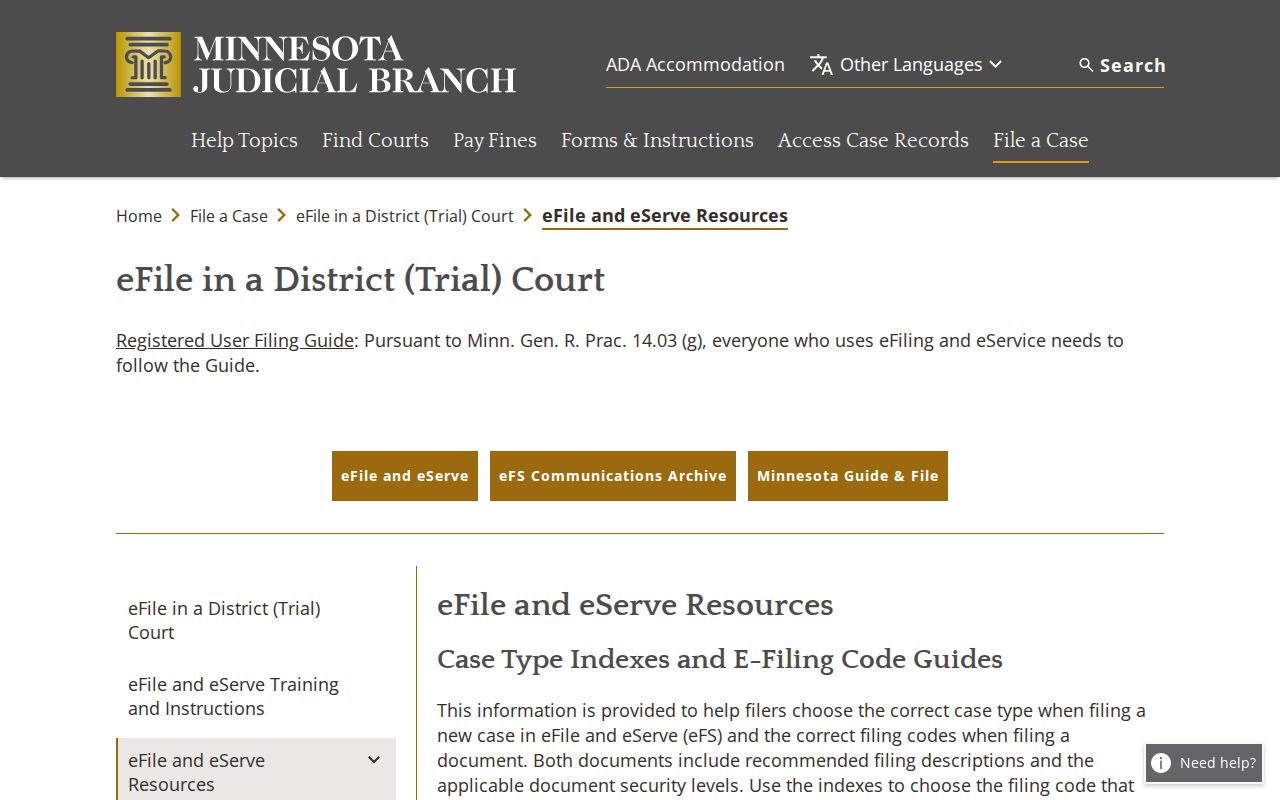
For a public request, MCRO or Court Administration remains the proper route. An eFS account or filing link is not public access to a court file.
Copy Fees and Certification
The current Grant District Court fee page splits ordinary copies from certifications. An uncertified copy, printout, scan, or photo shows as $0. A certified copy shows as $14. Certified plus exemplified runs $28. Plain copies work fine for ordinary reference. Ask for certification or exemplification only when the receiving purpose requires the court's official preparation.
| Grant court-record item | Displayed amount |
|---|---|
| Uncertified copy, printout, scan, or photo | $0 |
| Certified copy, instrument, or printout | $14 |
| Certified plus exemplified copy | $28 |
| Exemplified plus uncertified copy | $14 |
| Scanning or fax | $25 per 50 pages or part |
| Reports | $5 for 1-50 pages, then $25 per 50 pages or part |
Grant County Court Administration
10 Second Street NE
Elbow Lake, MN 56531
218-685-7675
Check the clock before you go. The state court page posts weekday hours of 8:00 a.m. to 4:30 p.m., while the county office page says 8:00 a.m. to 4:00 p.m. A late-day trip for court records can go sideways on that half hour. Call ahead. Payment for certified and exemplified copies runs by credit card or by check or money order made out to District Court Administrator, per the statewide copy guidance.
Grant County Court Records: MCRO Documents
MCRO Document Search works best when you bring a complete case number. Type it in and you get the case details. A list of documents comes with it, newest first. Eligible public records show View Document and Print buttons, and MCRO charges nothing for those public documents. Coverage has limits, though. Documents filed on or after July 1, 2015 face case-type limits, and some older public judgments, orders, opinions, and notices are narrower still. Keep in mind that MCRO is a lookup tool, not the filing system itself. The official Minnesota eFile and eServe page draws that line between filing and public record access.
Family case documents and post-adjudication paternity files face tighter remote limits. The same goes for exhibits, sealed material, and protected identifiers. HRO or OFP, CHIPS, and certain juvenile and delinquency records may be excluded or restricted outright. Commitment records face the same risk. A docket event you can see is no promise that its attachment will open online.
Access Rules for Court Records
Minnesota's working rule is public unless the law says otherwise. That is not the same as everything online. Court Administration can let you inspect public original records during business hours, using copies when security or practicality calls for them. Remote access sits under its own, separate limits. Rule 8 keeps sensitive identifiers out of remote view. That includes Social Security numbers. Financial-account numbers, street addresses, and telephone numbers are out too.
Key rules: Minnesota Rule of Public Access 8 governs inspection, copying, remote availability, redaction, and exhibits. Rule 4 identifies generally nonpublic categories and judicial restrictions. Minn. Stat. § 485.01 identifies the court administrator as clerk of district court, and Minn. Stat. § 13.03 provides Minnesota’s government-data inspection and copying framework.
Sealed, confidential, juvenile, child-protection, mental-health, domestic-abuse, and protection-order files each require their own access process. Never try to work around a restriction or fish for protected personal information. You can ask a specific question about a record's classification. You can also ask why a request was denied. The court publishes no Grant-specific deadline or appeal route, so assume none applies.
Grant County Court Records: Older Files
Older Grant County Court Case Records live in many forms: paper, microfilm, archives, bound volumes, or electronic files. When you contact Court Administration, bring the approximate year, the case category, known parties, the complete number if you have it, and the document or event you want. Details make the search faster. The public court pages confirm you can reach locally stored paper records at the courthouse. They post no Grant retention schedule, though. They make no promise that every pre-digital record is searchable in MCRO. That office can also tell you whether a physical file is on site, whether a copy can be made, and whether a transcript or exhibit needs its own request. Before you ask, run a Grant County Docket Search. It pins down the case number and event name you need. A precise request gets a precise answer.